This week you have been tasked with selecting two monologues: one Shakespearean and one from a contemporary Canadian play.
Your first challenge is to 'rewrite' the Shakespearean monologue into the language you yourself would use in the same situation/context. Consider who you are, where you are, to whom you are speaking and your purpose in speaking.
Make sure you can answer the questions on the handout you were given.
There are some youtube sites that have recordings of Shakespearean monologues. These are likely done by good readers who are pronouncing the words correctly and clearly for the recordings that teachers used to use as students read along. They are not necessarily well-acted! I encourage you to seek these and/or other sites out as you research your character.
Friday, 1 March 2013

Monday, 11 February 2013
Genre: Musical Theatre
The Mikado - Gilbert & Sullivan, 1885
West Side Story - Concept/Choreography by Jerome Robbins; Music by Leonard Bernstein; Lyrics by Stephen Sondheim, 1957
The photo below is from a stage production. When we watch the 1961 film version in class, consider what choices were made in adapting the choreography from stage to screen. The 1961 film stars Natalie Wood as Maria.
Hair - off-Broadway, 1967; Broadway 1968; Music by Galt McDermit; Book and Lyrics by James Rado and Gerome Ragni
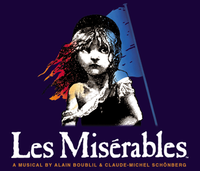
Les Miserables - English production - London's West End, 1985
West Side Story - Questions and Task
The questions are due on Wednesday and you will have them back on Thursday, which is Valentine's Day. The tasks are due on Friday, Feb. 15.
ADA 3M/4M
February 8, 2013
Theatre Genres: Reflections of Society and Culture
MUSICAL THEATRE
The example of musical theatre we are using for this unit is
West Side Story, which won numerous awards as a Broadway Musical and
later as a Hollywood film. While many
musicals are considered lighter entertainment, West Side Story deals
with serious issues.
- List three of the things the opening dance sequences establish for the audience as the film version begins. (K/U: 3 marks)
- Read
the lyrics to “When You’re a Jet”. According
to this song, why do boys join gangs? (K/U: 2 marks)
- The
Puerto Ricans discuss why they came to America and whether it’s better for
them in the ‘land of opportunity’ or ‘back there’. At one point, Anita calls the leader of
the Jets a ‘polack’, while her lover is a ‘spic’—and complains that people
of any other ethnic background are accepted as Americans while they are
not. What does this show of
American society at that time? From
you perspective and experience, has this shifted/changed? Explain your viewpoint, citing the tv,
movies, theatre and/or other media sources upon which it is based. (I
– 5 marks)
- “Officer
Krupke” is a favourite song from
this musical. In a few short
verses, it deals with the issue and problems of juvenile delinquency. What social
agencies/services/institutions does it cover? Does it blame, explain, or simply shine
a light onto the issue to make us think?
(I – 5 marks)
- Creative Choices: Pick A or B: Rubrics
for each course to follow—although you are choosing from the same options,
your evaluation is based on the individual course expectations. J
A.
Imagine you are developing a musical for a
Romeo-and-Juliet story set in Dryden High School. Write a song lyric that establishes a
situation or explores a problem central to your version of the story. (You may wish to set it to one of the West
Side Story tunes for optimal effect….or another show-tune melody.)
B.
Write a script for a two character scene that could be considered
‘missing’ from West Side Story. It can
be set prior to, during, or after the events of the existing musical. It should reveal character and/or develop
situation. Write it in proper script
format.
Tuesday, 5 February 2013
Romeo and Juliet...and its Aftermath.....
With the 3M students, create a tableaux series showing us the story of Shakespeare's Romeo and Juliet. You may only use 15 scenes. GO!
Full text of Romeo and Juliet, by Act
Synopsis of Plot and Dramatis Personae
Questions:
Part A:
1. What was the biggest challenge facing the group as you began this assignment?
2. What was the biggest challenge you faced with this assignment as an individual?
3. How were roles determined? Were the right decisions made? Why/why not?
4. How were scenes decided upon? Were the right decisions made? Why/why not?
5. How would having a director have changed the process/product of this assignment? Explain.
Part B:
1. List three works of art (music, painting, photography, sculpture, literature, film, theatre, etc.) that link to Romeo and Juliet in some way. For example, West Side Story is a 20th century musical and film based on R & J, and musicians as diverse as Lou Reed and Taylor Swift have songs referring to the star-crossed lovers.
Full text of Romeo and Juliet, by Act
Synopsis of Plot and Dramatis Personae
Questions:
Part A:
1. What was the biggest challenge facing the group as you began this assignment?
2. What was the biggest challenge you faced with this assignment as an individual?
3. How were roles determined? Were the right decisions made? Why/why not?
4. How were scenes decided upon? Were the right decisions made? Why/why not?
5. How would having a director have changed the process/product of this assignment? Explain.
Part B:
1. List three works of art (music, painting, photography, sculpture, literature, film, theatre, etc.) that link to Romeo and Juliet in some way. For example, West Side Story is a 20th century musical and film based on R & J, and musicians as diverse as Lou Reed and Taylor Swift have songs referring to the star-crossed lovers.
Thursday, 31 January 2013
Monday, 11 June 2012
Last Task....
Bravo for a very interesting and thought-provoking performance!
Please report to the classroom at the beginning of the period to make sure everything is put away, as you were the last performers of the year. Then come to the library so that you can complete your independent study questions. These are very important--two or three weeks of 'term work' equivalency, so do not ignore them! They are due Wednesday.
Rachel, I said you would be performing your monologue in 119, but we are going to be in the library. We'll sort things out when I see you in person. :) So glad you were able to be in class today!
Please report to the classroom at the beginning of the period to make sure everything is put away, as you were the last performers of the year. Then come to the library so that you can complete your independent study questions. These are very important--two or three weeks of 'term work' equivalency, so do not ignore them! They are due Wednesday.
Rachel, I said you would be performing your monologue in 119, but we are going to be in the library. We'll sort things out when I see you in person. :) So glad you were able to be in class today!
Friday, 8 June 2012
Two last big things....
Monday is your performance, which is based around your Canadian monologues. I am really looking forward to seeing what you've accomplished!
Don't forget the independent study work that you were given a couple of weeks ago...it's due on Wednesday...you'll have the library that day...make sure you e-mail it to yourself so you can easily access it.
Don't forget the independent study work that you were given a couple of weeks ago...it's due on Wednesday...you'll have the library that day...make sure you e-mail it to yourself so you can easily access it.
Subscribe to:
Posts (Atom)